The Academy of Living
The 72-Hour Permaculture Design Course
Three weeks on our working farm in Biliran — the foundation course of the worldwide permaculture movement, taught in tropical conditions, by farmers who live it.
What Is a PDC?
A design course, not a boot camp of techniques
A Permaculture Design Course — nearly always shortened to PDC — is the foundation course of the worldwide permaculture movement. Across a minimum of 72 hours of teaching it covers the ethics, principles and design methods of permaculture, then asks you to prove what you have learned by producing a real design for a real piece of land.
You will spend plenty of time in our gardens and fields, but the purpose is bigger: to learn how to read a piece of land and the people who depend on it, and to bring the two together in a workable plan. Graduates receive the Permaculture Design Certificate — the shared qualification held by permaculture teachers, designers and farm projects around the world.
As educator Rosemary Morrow puts it: the PDC is not a boot camp of techniques — it provides principles for approaching global and local problems. The hands-on skills come alongside or after. The PDC teaches the thinking that connects them.
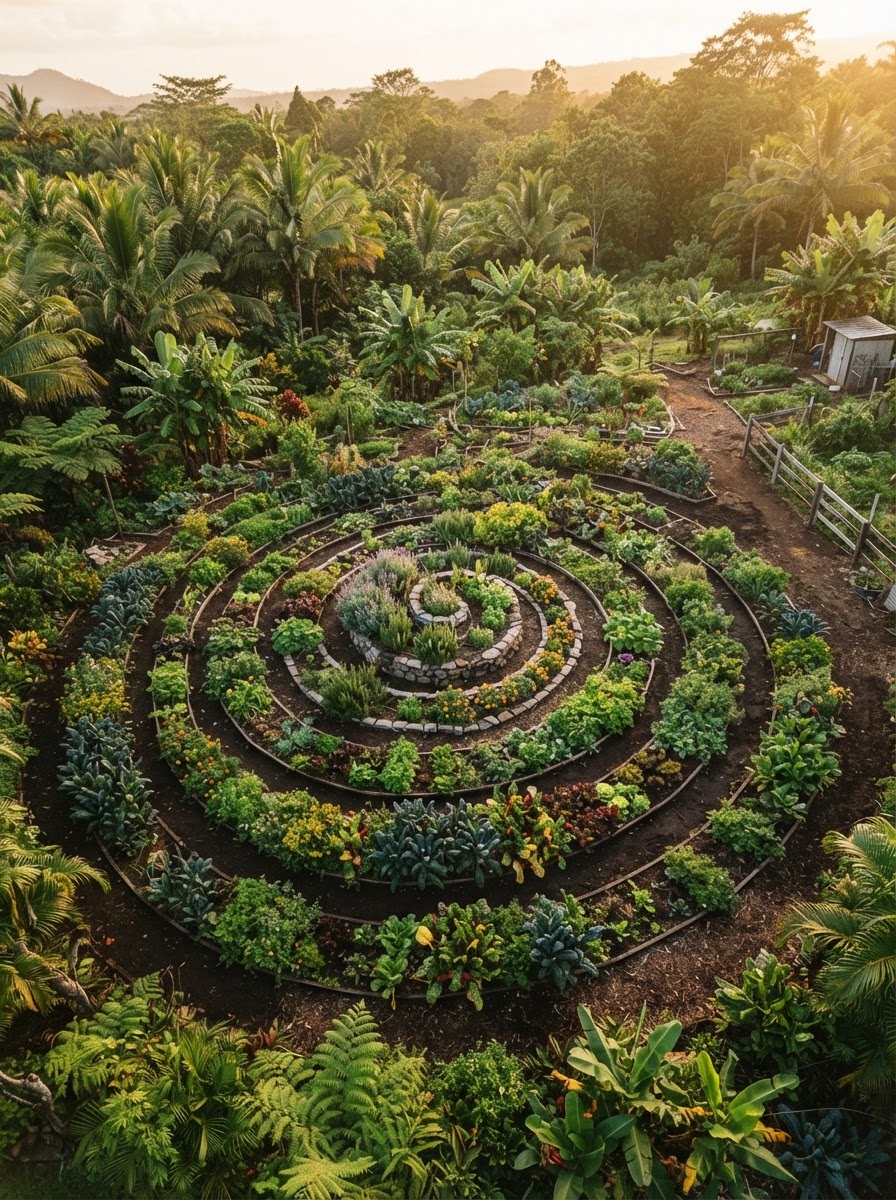
"Permaculture is the conscious design of landscapes and human settlements that work the way natural ecosystems work — providing food, water, energy and shelter while rebuilding the living systems underneath."
The Lineage
Where the PDC comes from
Permaculture began in Tasmania in the mid-1970s as a collaboration between two people. Bill Mollison had spent his early life fishing and working in the bush before becoming a wildlife scientist, and had watched the ecosystems of his childhood collapse around him. David Holmgren was a young environmental design student who met Mollison in Hobart in 1974. Out of their conversations came the word permaculture and, in 1978, the book Permaculture One.
Mollison resigned his university position in 1979 to teach permaculture full time and founded the Permaculture Institute. In January 1981 the first 26 students graduated from an intensive lecture series, and the course was born. When Mollison published Permaculture: A Designers' Manual in 1988, it became the textbook the course is still built on — the same 72-hour curriculum we teach at Kalinawan today.
Graduates taught courses of their own, their students taught more, and the PDC carried permaculture to every inhabited continent. Our own farm is part of that lineage: land once farmed conventionally and depleted, now being brought back to life by these very methods.
The Curriculum
What the 72 hours cover
The number you will meet everywhere is 72 hours — a minimum of contact time between teacher and student, honored by permaculture networks worldwide. In practice our course runs three residential weeks on the farm. The hours are a minimum: 72 hours can introduce each topic, but never exhaust it.
The Ethics
Earth care, people care, fair share — the three promises every design must keep.
Design Principles
David Holmgren's twelve principles, plus the Filipino indigenous practices that embody them.
Ecology & Patterns
How living systems behave, and how to read the patterns nature repeats everywhere.
Reading the Land
Mapping, sector analysis and site analysis on our own hillside farm above the sea.
Water in the Landscape
Rainwater harvesting, swales, ponds and aquaculture for the tropical monsoon climate.
Soils
How soil lives and dies — and how to rebuild it with compost, mulch and microbial life.
Trees & Food Forests
Designing layered forest gardens, from canopy crops to root vegetables.
Climate & Microclimate
Designing for your climate zone and creating the microclimates you wish you had.
Zoning
Placing every element, from the kitchen door outwards, so energy flows sensibly.
The Built Environment
Natural building, bamboo, appropriate technology and the passive energy of good design.
Invisible Structures
Community, economics and access to land — the systems that decide whether designs survive.
The Final Design Project
A real site, a real client, a real plan — presented by your team at the course's close.
The Heart of the Course
The final design project
The certificate is not awarded for sitting through lectures. In the closing days of the course, you and a small team take a real site — often for a real client in our neighboring barangays — and carry a design all the way from survey to presentation: mapping the land, reading its water and wind, interviewing the people, and presenting a whole-site plan that could actually be planted.
Full attendance of the 72-hour program, including completion and presentation of the group-based design project, is required for the certificate. It is the moment the course stops being information and becomes a capability you carry with you.
The Certificate
What it means — and what it does not
Complete the course and the design work, and you hold the Permaculture Design Certificate — the credential people mean when they talk about permaculture certification. By long tradition it is the qualification that lets you call your work permaculture, take on design projects, and eventually teach. It is also the entry requirement for nearly everything that comes after: the diploma in applied permaculture design, teacher training, and advanced design courses.
It is just as important to understand what it is not: there is no single central accreditor of PDCs anywhere in the world. Certificates are issued by the school or teacher who runs each course, following a shared international curriculum. The PDC is a foundation — the movement's common starting line, not a professional licence. What gives it weight is the lineage behind it, and the design work you produce to earn it.
Join the Next Course
3 Weeks · 72 Hours · $950
Taught on our working farm in Sitio Tagaytay, Balaquid, Biliran — accommodation and meals included. Dates are set by the season and the group; tell us when you want to come and we'll shape the course around it.

