"Off-grid" is not an emergency here. It is simply how the island lives — and how you learn to live with it.
From the farm journal at Sitio Tagaytay, Balaquid, Cabucgayan, Biliran
Before the sun rises over the ridge, the haven is already awake. There is no switch to flip and no meter counting your hours — only the slow arithmetic of a day powered by the sky, watered by the rain, and fed by the soil beneath your feet. This is life at Camp Kalinawan, and these are the field notes we gather while our Off-Grid & Survival course takes shape.
Power from the sun
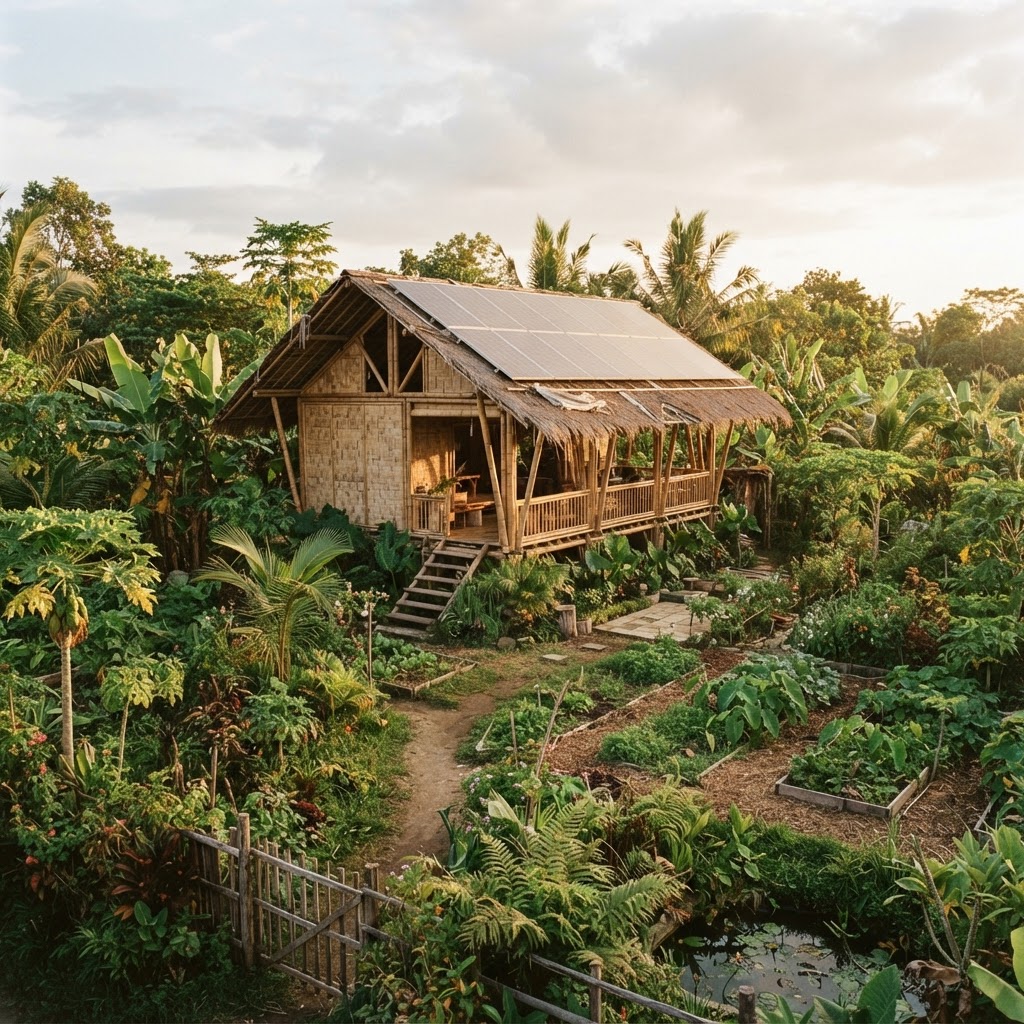
In the tropics, the sun is the most generous neighbour you will ever have. By mid-morning in the dry season our batteries are full, and on a clear day the panels give back far more than the bamboo hall needs — so the fans turn, the lights glow warm, and the kitchen's rice cooker hums along without a single flicker of doubt.
Wet season asks for more humility. Clouds sit low over the ridge for days, and the system still returns most of its charge by evening — enough to learn that an off-grid home is not built on abundance but on awareness. You begin to read the sky the way farmers read soil: an overcast week means the freezer waits, and dinner is cooked over firewood instead.
There is no grid here to fall back on, and that is precisely the lesson. Every watt is harvested, stored, and spent with intention. Guests who arrive afraid of the silence leave understanding it as a kind of wealth.
Water from sky and stream
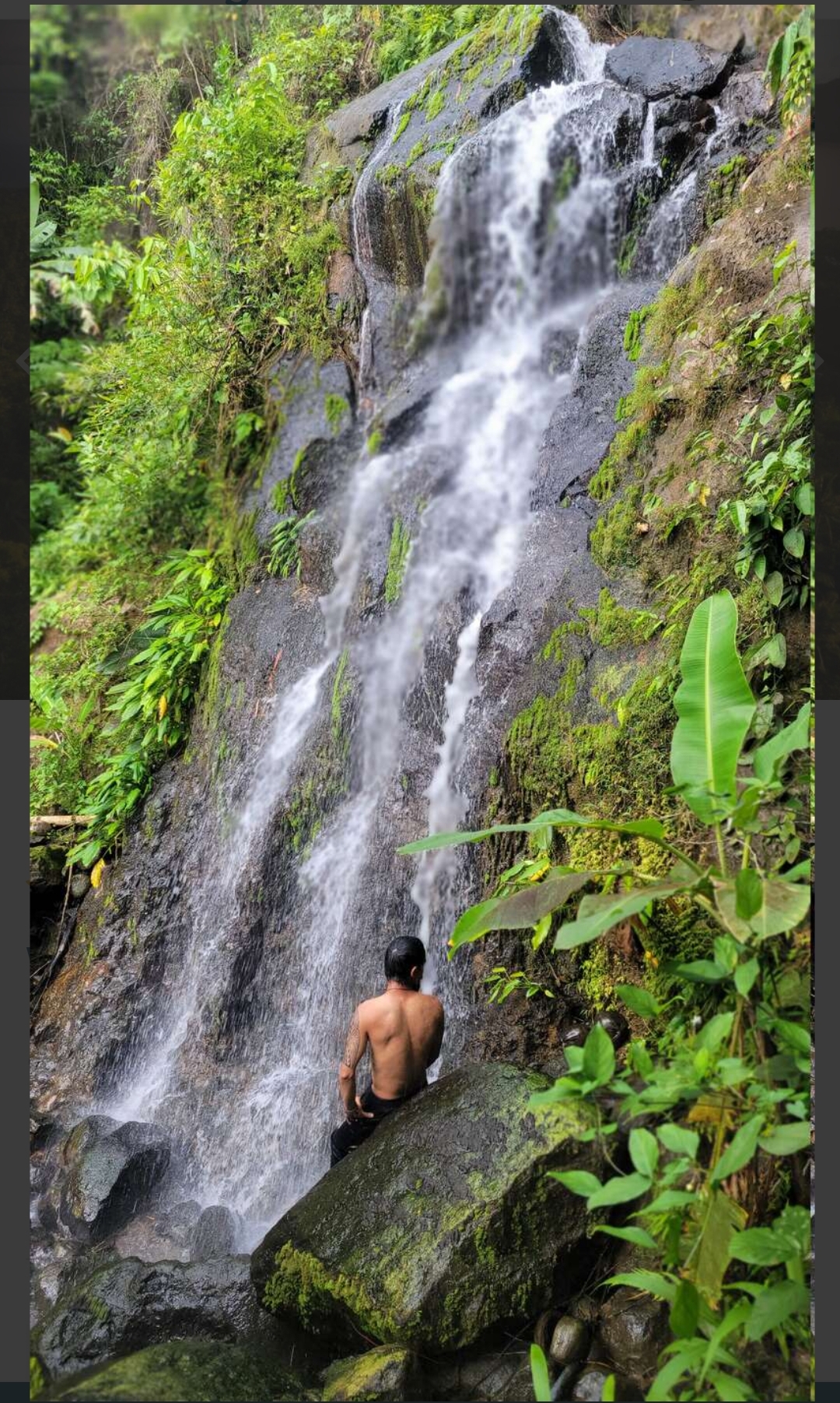
No pipes reach this valley, and none are needed. Rain is harvested from every roof into tanks and jars, and a spring-fed river threads through the farm, cold and clear enough that a morning bath beside it feels like a ceremony rather than a chore.
Every drop is filtered through sand and charcoal before it reaches a cup, boiled for tea, or diverted to the gardens where it feeds the bananas, the greens, and the seedling nursery. In the wet months the tanks overflow and the land drinks freely; in the dry months you learn the true weight of a bucket.
Water teaches the same lesson as the sun: nothing is owed to you here. What you collect, you keep.
Cooking with coconut and fire
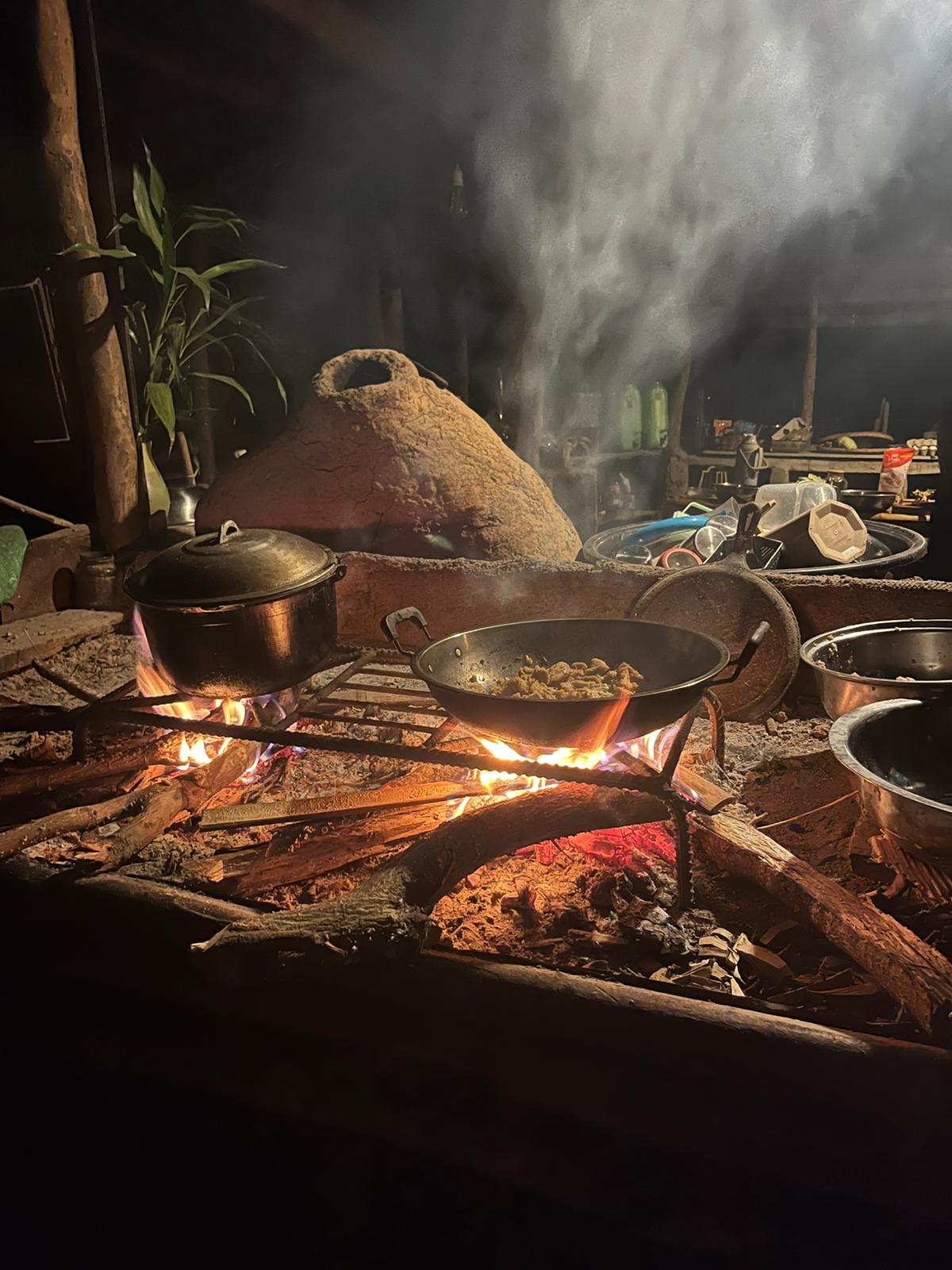
The open-air fire kitchen is the heart of the haven. Dried coconut husks crackle beneath the pots — smoky enough to keep the mosquitoes honest — while coconut shells are slow-burned into charcoal in a pit covered with banana leaves, a trick borrowed from the old ways of turning waste into fuel.
A single-burner propane tank stands by for typhoon weeks and for the quick morning eggs. And the humble rice cooker, powered by the sun, earns its place as the most versatile tool on the farm: rice, stews, steamed vegetables, even bread on an ambitious day.
Meals here are grown steps from the table, cooked over heat the land itself provides, and eaten together at the long table while the fire settles into coals.
Food from the land and sea
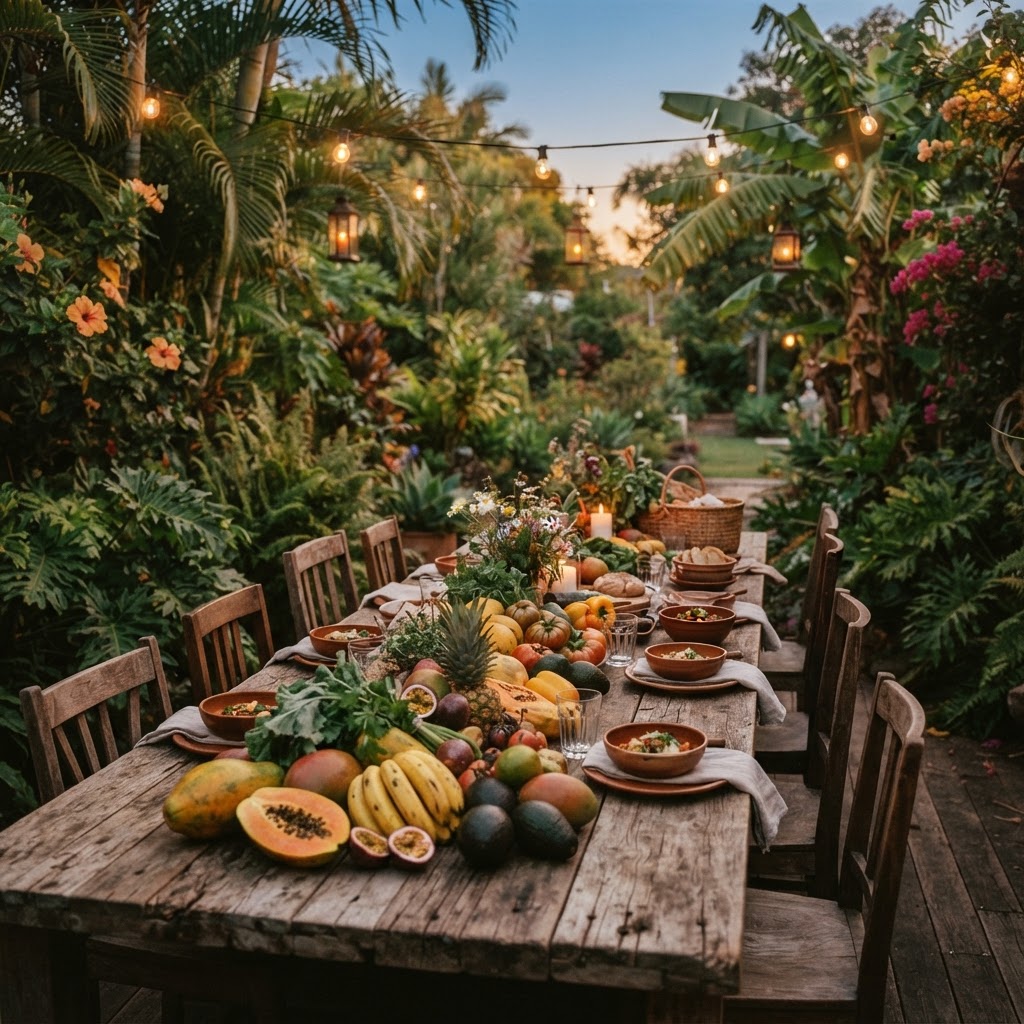
The jungle gives freely to those who walk it slowly: wild leaves, fruits, and root crops gathered along the trail. The sea gives more — small fish, mud crabs, and a seemingly endless supply of shellfish from the reef's shallow gardens, and salt evaporated from clean water in the old way.
On the farm, rice harvests come in by the sack, chickens wander at their leisure, and the coconuts arrive daily without being asked. What the family does not eat is shared, sold at the village market, or pressed into milk and oil in the kitchen.
Hunger, here, is a solvable problem — but only if you know your land, your tide, and your neighbours.
Living among self-sufficient neighbours
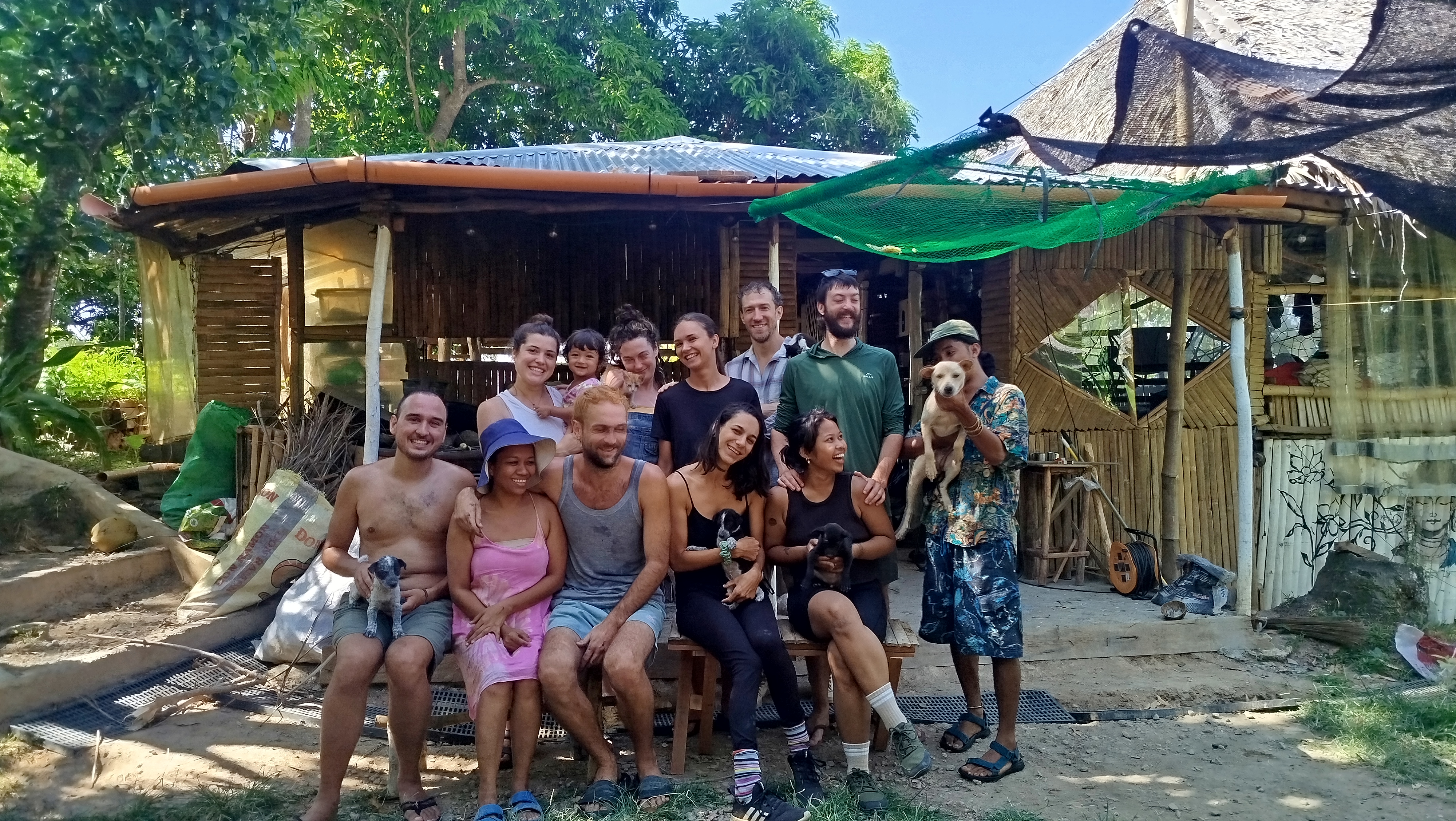
The deepest surprise for most visitors is that we are not pioneers. Much of the surrounding village has lived off-grid far longer than we have — cooking over charcoal, drawing water by hand from wells, lighting homes with small solar lamps, and meeting at the sari-sari store when the phone signal wanders in and out.
This is an entire region of quiet self-reliance. Skills are not taught in classrooms here; they are absorbed — by watching a neighbour weave a roof, helping with a copra harvest, or sitting long enough for someone to hand you a blade and show you the angle.
That is why our Off-Grid & Survival course is still growing: it is being written by the farm itself, one season at a time, in partnership with the people who never needed a course to begin with.

